

Emergency Tree Removal Services Near You Today: Fast, Safe, and Licensed 24/7 in Florida
Emergency tree removal is the rapid evaluation and controlled removal of trees or large limbs that pose immediate risk to people, structures, utilities, or access. This service works by combining an urgent site assessment, stabilization techniques, and specialized equipment to reduce imminent hazards and restore safe conditions quickly. Homeowners and property managers gain safety, liability reduction, and faster insurance documentation when professionals handle urgent removals. This article explains what constitutes an emergency, typical response expectations in Florida, storm-damage protocols, and the safety equipment and certifications professionals use. You will also find practical guidance on cost drivers, insurance interactions, and the exact call-to-cleanup process so you can act decisively when a dangerous tree situation arises. Throughout the guide we use terms like 24/7 emergency tree removal, fallen tree removal, and licensed and insured tree removal to map practical steps to local rapid-response options.
What Are Emergency Tree Removal Services and Why Are They Essential?
Emergency tree removal services are specialized interventions that remove trees or limbs creating immediate danger; they prioritize human safety and property protection through rapid assessment and controlled removal. The mechanism involves triage by a certified arborist or trained crew, stabilization of hazardous material (cordoning, shoring), and staged sectioning to lower loads safely, which minimizes secondary damage. The essential benefit is preventing sudden collapse that can injure people, damage homes, or interrupt utilities, so timely action reduces risk and downstream costs. Understanding triggers for emergency removal helps homeowners decide when to call professionals versus scheduling routine maintenance.
For local property owners who need an immediate option, Volusia Bobcat and Tree Service operates 24/7 emergency services across the region and can be engaged for urgent hazard mitigation; this commercial aim is to Obtain More Customers. The company is presented here only as a local provider that offers licensed and insured crews and rapid deployment when trees threaten safety. With that context, next we list common emergency scenarios so you can recognize when removal is necessary.
What Situations Require Immediate Tree Removal?
Immediate tree removal is needed when the tree or limb presents a clear and present hazard to life, infrastructure, or essential services. Examples include large limbs or whole trees that have fallen on buildings or vehicles, trunks cracked or split and leaning toward occupied structures, and trees contacting or threatening power lines which create electrocution and fire risks. Rapid removal is also necessary when root plates lift, indicating imminent uprooting, or when a tree has struck a septic, gas, or water line that compromises utilities. Recognizing these situations fast lets homeowners secure the area and call professionals who can prioritize the most dangerous conditions first.
How Does Emergency Tree Removal Ensure Property Safety?
Emergency crews follow a predictable sequence to restore safety: assess the immediate risks, establish exclusion zones, stabilize unstable material, and remove sections using controlled cuts and rigging. Rigging techniques and mechanical lowering reduce uncontrolled drops that damage structures; chippers and bobcats clear debris while crews document conditions for insurance. This staged approach minimizes collateral harm to landscapes and adjacent structures, and it produces reliable documentation—photos, risk notes, and an itemized estimate—that supports claims. Understanding these steps helps property owners appreciate how professional removal is both a safety and risk-transfer measure.
What Makes 24/7 Emergency Tree Services Different from Regular Tree Care?
Round-the-clock emergency services differ from scheduled tree care by combining availability with an equipment-ready posture, trained rapid-response crews, and incident triage capability. Emergency teams carry extra rigging, stabilization gear, and heavy equipment to handle urgent scenarios safely, and they prioritize jobs by immediate hazard rather than appointment calendars. Insurance documentation and working with local authorities (for power-line incidents or road obstructions) are routine in emergency operations, unlike standard pruning or scheduled removals. These operational differences ensure urgent threats are contained quickly and safely, which is essential during storms or unexpected failures.
How Quickly Can Emergency Tree Removal Services Respond Near You?
Response time for emergency tree removal describes how soon a crew can arrive and begin mitigation after a report; it is driven by crew availability, distance, weather, and concurrent storm demand. Typical single-incident responses in a non-storm period are measured in hours rather than days, with some local crews able to mobilize within two to six hours for urgent hazards. During widespread storm events response windows can extend to 24–72 hours as providers triage multiple high-risk calls; understanding this helps property owners set realistic expectations. Faster response reduces secondary damage and improves insurance outcomes because early stabilization protects structures and evidence.
What Is the Typical Response Time for Urgent Tree Cutting in Florida?
In typical urgent situations outside major storms, local crews often aim to arrive within two to six hours, assess the site, and perform initial stabilization to secure life-safety hazards. Response can be faster for situations that block egress or endanger residents directly, while access constraints, heavy rainfall, or downed utilities can delay arrival. During storm surges with many simultaneous incidents, providers triage by severity, so less-critical threats may wait longer while life-safety calls get immediate attention. Knowing these timelines helps homeowners secure their property and document the situation while awaiting professional arrival.
Which Florida Counties Are Covered by Volusia Bobcat & Tree Service?
Volusia Bobcat and Tree Service focuses coverage in Volusia, Seminole, Flagler, and Orange County in Florida, giving local crews geographic familiarity that supports faster mobilization and county-specific permit knowledge. Local coverage means crews understand regional storm patterns, common species failure modes, and municipal emergency exemptions, all of which speed practical decisions on site. That proximity often shortens travel time compared with non-local providers, improving the odds of rapid stabilization when time matters most. (florida-tree-service.com)
How Does Local Expertise Improve Emergency Tree Removal Outcomes?
Local expertise improves outcomes by aligning assessment criteria with regional species behavior, soil conditions, and typical storm impacts; crews familiar with local trees identify likely failure modes faster. Relationships with county offices and utility crews speed permit clarification and coordinated responses in emergencies near public infrastructure. Additionally, experienced local teams can predict secondary risks (saturated soils, root plate stability) and plan removals that minimize collateral landscape damage. This combination of ecological knowledge and municipal familiarity reduces time on site and improves the safety and thoroughness of emergency interventions.
How Is Storm Damaged Tree Removal Handled Safely and Efficiently?
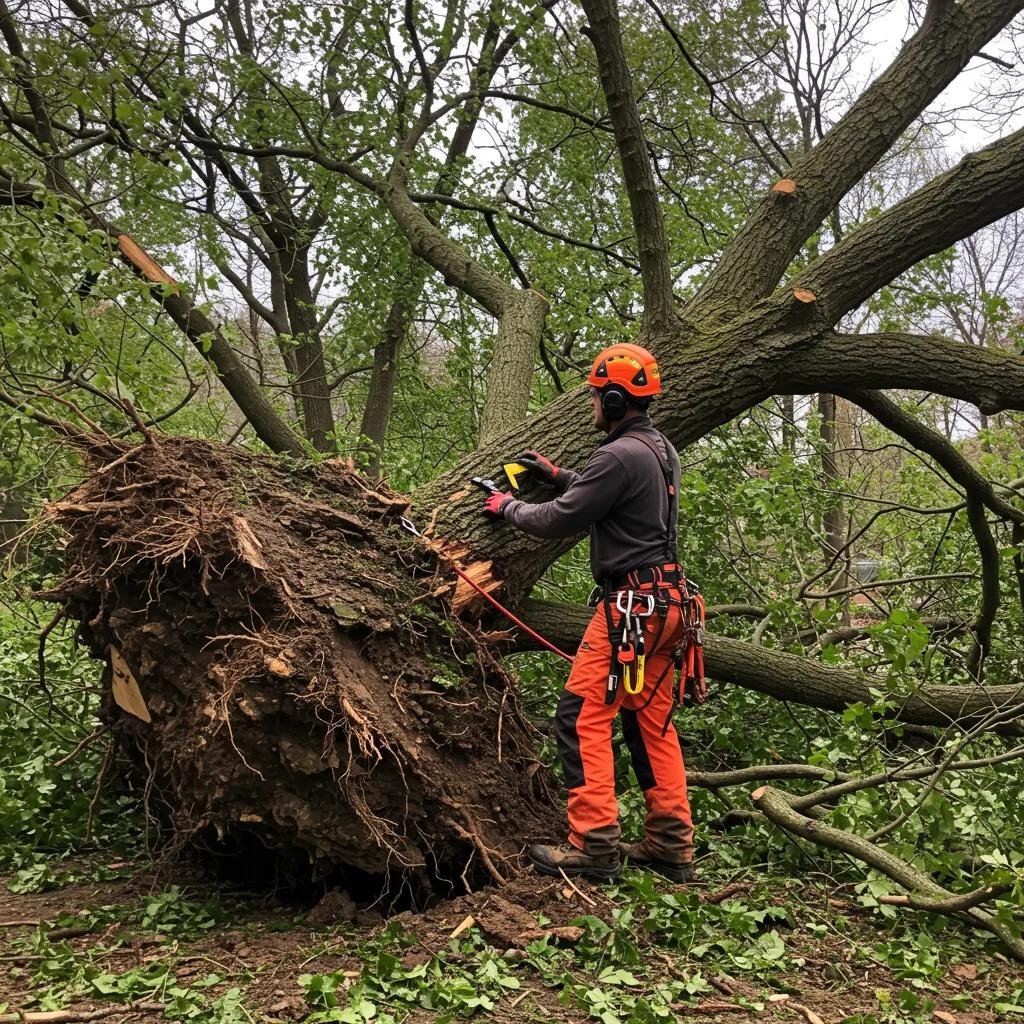
Storm-damaged tree removal combines rapid triage, staged removal, and heavy-equipment-assisted cleanup to restore safety while protecting property. The process begins with hazard mapping to prioritize dangerous trees, then stabilizing high-risk pieces before staged sectioning and lowering using rigging or crane assistance as required. Efficient cleanup uses chippers, bobcats, and haul-away plans to clear debris quickly and restore access, while certified arborists document conditions for insurance and future mitigation. Understanding the equipment roles and a safety checklist clarifies why professional intervention is safer and faster than ad hoc removal.
What Are the Steps in Removing Storm-Damaged Trees?
The list below outlines the core storm-damage removal phases.
- Assessment and Triage: Crews evaluate immediate risks and prioritize urgent hazards.
- Stabilization: Temporary supports and exclusion zones are deployed to prevent collapse during work.
- Sectional Removal: Controlled cutting and rigging lower sections safely to the ground.
- Cleanup and Disposal: Chippers, bobcats, and haul-away trucks remove debris and grind stumps.
- Documentation and Inspection: Final checks and documentation support insurance claims and future risk mitigation.
How Do Certified Arborists Assess Hazardous Trees After Storms?
Certified arborists perform a structured assessment looking for root plate displacement, trunk splits, cavity exposure, crown instability; they use visual inspection and, when necessary, simple probes or decay detection tools. Arborists apply a risk-rating framework to determine urgency—identifying trees that require immediate removal versus those suitable for remediation through pruning or bracing. They also document findings with photographs and written notes that insurers typically expect to process claims efficiently. This assessment balances safety, preservation where feasible, and clear justification for removal decisions.
The destructive winds of Hurricane Andrew in 1992 significantly impacted Florida’s urban forest, leading to extensive damage and prompting research into tree species’ wind resistance.
Hurricane Andrew’s Impact on Florida Trees and Wind Resistance
The destructive winds of Hurricane Andrew dramatically changed the urban forest in Dade County, Florida on August 24, 1992. Overnight, the tree canopy was replaced by a landscape of broken, uprooted, defoliated and severely damaged trees. To assist communities in reforestation efforts, scientists at the University of Florida conducted a homeowner survey to determine how different tree species responded to strong winds.
Wind and trees: A survey of homeowners after Hurricane Andrew, WG Hubbard, 1996
What Equipment Is Used for Safe Storm Cleanup and Tree Removal?
Storm cleanup relies on a combination of heavy and precision equipment to manage different tasks safely and quickly. Typical tools include chainsaws for cutting, rigging gear and ropes for controlled lowering, chippers for reducing branch volume, stump grinders for post-removal restoration, bobcats for material handling, and cranes for precision lifts of large sections. Each piece plays a role: cranes allow removal in confined sites with minimal collateral damage, bobcats speed debris transport, and chippers shrink physical volume for efficient disposal. The right equipment selection reduces time on site and lowers the risk of additional property damage.
| Equipment/Method | Primary Use Case | Safety/Speed Benefit |
|---|---|---|
| Crane-assisted removal | Large tree sections in confined or urban sites | Precision lowering, minimizes collateral damage |
| Bobcat / skid-steer | Debris handling and loading | Rapid material movement and staging |
| Rigging and ropes | Controlled sectional lowering | Reduces uncontrolled drops and structural impact |
| Chippers | Branch and limb volume reduction | Speeds cleanup and reduces hauling needs |
| Stump grinder | Post-removal site restoration | Eliminates trip hazards and prepares for replanting |
What Should Property Owners Know About Hazardous Tree Removal Services?
Hazardous tree removal requires proper identification, licensed and insured crews, and, in some cases, crane-assisted techniques for safe precision; understanding these attributes protects homeowners legally and financially. Qualified providers document hazards and follow safety standards that insurers look for when approving claims. When a removal requires heavy rigging or cranes, the additional cost is often justified by reduced collateral damage and minimal exposure to liability. Homeowners benefit from knowing when a situation calls for emergency removal versus scheduled remediation.
How Are Hazardous Trees Identified and Evaluated?
Homeowners can spot hazardous trees by looking for cracks in the trunk, large cavities, fungal conks, root heave, or lean progression after storms; these visible signs often indicate advanced decay or structural compromise. A quick triage checklist helps determine urgency: is the tree near occupied structures, on a slope, or touching utilities? If any of these are true, escalate to a professional assessment. Documenting these signs with photos and timestamps creates a useful record for insurance purposes and supports the arborist’s removal recommendation.
| Service | Provider Requirement | Benefit |
|---|---|---|
| Emergency removal | Licensed and insured crews | Immediate risk reduction and liability coverage |
| Certified arborist assessment | ISA-certified risk evaluation | Defensible documentation for insurance claims |
| Crane-assisted removal | Trained crane operators and riggers | Precision, minimized property damage |
Why Is Licensed and Insured Service Critical for Hazardous Tree Removal?
Licensed and insured crews provide financial protection if property or third parties are harmed during removal and demonstrate compliance with local regulations and safety standards. Insurance coverage for operators and liability limits protect homeowners from liabilities related to workplace accidents. Documentation from licensed providers also tends to align with insurer expectations, smoothing claim reimbursement and reducing dispute potential. Choosing licensed and insured services transfers risk appropriately and ensures professional procedures are followed under regulated standards.
What Are the Benefits of Crane-Assisted Hazardous Tree Removal?
Crane-assisted removal is the safest option when large sections must be removed near buildings, tight setbacks, or sensitive landscaping because it allows operators to lift whole sections without dragging or dropping them. This approach prevents collateral damage to roofs, driveways, and planting beds, and it can shorten job times on complex sites. While crane use increases cost, the reduction in property repairs and the speed of safe removal often make it the most economical choice for high-risk scenarios. Property owners should request a crane recommendation when access or proximity to structures makes conventional rigging unsafe.
| Equipment | Use Case | Value |
|---|---|---|
| Crane | Confined spaces, near structures | Precision removal, reduces repair costs |
| Rigging | Moderate complexity, available drop zones | Cost-effective control of heavy loads |
| Manual climb | Accessible, lower-risk trees | Lower cost but limited for major hazards |
How Much Does Emergency Tree Removal Cost and Does Insurance Cover It?
Emergency tree removal costs vary widely based on tree size, location, equipment needs, and hazard complexity; typical ranges depend on whether cranes or complex rigging are required and how much labor and time the job demands. Insurance may cover removal when the tree causes direct property damage or creates an immediate hazard tied to a covered peril like wind or storm; preventative removals or aesthetic removals are usually excluded. Clear documentation—photos, professional assessment, and itemized invoices—improves the chances of claim acceptance. Below we compare common cost drivers to help homeowners anticipate price variability.
What Factors Influence the Cost of Emergency Tree Removal in Florida?
Cost drivers include tree height and diameter, species density, accessibility (yard tightness, fences), proximity to structures or power lines, and required equipment such as cranes or extended rigging. Labor intensity rises when crews must work in tight spaces or perform complex lowering, and disposal or stump grinding add to the total. Night or after-hours emergency calls may carry premium rates due to urgent mobilization and overtime. Understanding these factors helps homeowners evaluate quotes and set expectations for both safety and price.
| Service Component | Cost Factor | Typical Impact on Price |
|---|---|---|
| Crane use | Equipment rental and operator | High |
| Tree size (height/diameter) | Labor and time | High |
| Accessibility | Time for rigging and lowering | Medium–High |
| Cleanup and disposal | Chipping, hauling, stump grinding | Medium |
| After-hours emergency call | Overtime and rapid mobilization | Medium |
Does Homeowners Insurance Cover Fallen or Storm-Damaged Tree Removal?
Insurers commonly cover removal costs when a storm-damaged or fallen tree causes direct damage to a covered structure or creates an immediate hazard to insured property; coverage specifics depend on policy wording and deductible. Trees that fall without causing covered damage or are removed as preventative measures are frequently excluded. To support a claim, homeowners should document the damage, preserve evidence where safe, and obtain a professional assessment and invoice showing the cause and cost of removal. Early documentation and professional reports clarify the claim and help insurers determine coverage quickly.
How Can Property Owners Get Free Estimates and Price Matches?
Many local providers offer free on-site estimates that include a hazard assessment, scope of work, and preliminary pricing; these estimates typically describe whether crane or rigging is required and list cleanup options like chipping or stump grinding. Volusia Bobcat and Tree Service, for example, advertises free estimates and a price match policy to give homeowners transparent options and competitive pricing when safety is urgent. (florida-tree-service.com) When requesting quotes, provide photos, tree dimensions, and clear access notes to speed accurate estimates. Comparing multiple written estimates gives homeowners leverage to balance cost and safety.
The list below explains what to expect in a free estimate and how price match offers work.
- Free estimate includes inspection: An on-site or photo-based assessment that outlines the recommended work and equipment.
- Scope and options are itemized: Estimates separate tree removal, stump grinding, and debris removal for clarity.
- Price match policies require comparable written quotes: Providers verify scope parity before matching competitor pricing.
- Documentation supports insurance claims: A professional estimate aids in claims and reimbursement processes.
What Is the Emergency Tree Removal Process from Call to Cleanup?
The end-to-end process begins with a prompt report, proceeds through on-site assessment and documented recommendations, and concludes with controlled removal, cleanup, and final inspection or paperwork for insurance. Crews prioritize life-safety hazards, stabilize the situation, and execute sectional removals using rope, rigging, or cranes as required. Debris is chipped, hauled, and stumps graded or ground according to the agreed scope, and crews provide documentation including an itemized invoice and photographs. Knowing each step reduces homeowner uncertainty and improves coordination with insurers and local authorities.
How to Contact Emergency Tree Removal Services Quickly?
When contacting emergency services, gather the exact location, a short description of the hazard, photos if safe to take them, and note any immediate safety concerns like downed power lines or trapped vehicles. Use a direct phone call for immediate life-safety situations, while online forms may suffice for urgent but non-immediate hazards; have property access notes ready to speed dispatch. Initial triage will determine priority and whether the crew will perform temporary stabilization before full removal, so accurate information accelerates the right response. Preparing these details improves the efficiency of the call and helps crews arrive prepared.
What Happens During the On-Site Tree Assessment?
On-site assessment includes a structural inspection by a certified arborist or trained crew leader, evaluation of root stability, trunk integrity, and crown condition, and a risk-rating that dictates urgency and method. The assessor identifies any utility involvement, access constraints, and the need for specialized equipment, then provides a written or verbal on-the-spot estimate and safety recommendation. This assessment also generates the photographs and statements insurers commonly request to process claims faster. A clear, documented assessment aligns homeowner expectations with the required work and cost.
How Is Tree Removal Executed and Property Restored?
Removal execution uses controlled cutting with rigging or crane-assisted lifts to lower sections safely, followed by chipping and material handling with bobcats and trucks for efficient cleanup. Stump grinding or removal is performed if included in the scope, and crews grade the site and remove trip hazards before a final inspection. The team completes job documentation—before/after photos and an itemized invoice—that supports insurance filings and confirms the scope was completed. This coordinated finish restores safety and prepares the property for any necessary restoration or replanting.
What Are Common Questions About Emergency Tree Removal Services?
Homeowners often ask whether DIY removal is safe, how to prepare for storm season, and what permits might apply; clear, concise answers reduce risk and guide correct action. Safety-first responses stress never working near power lines and documenting damage for insurance. Professionals can also advise on pre-storm preventive measures that reduce emergency frequency and navigate local permit requirements when removal is mandatory post-event. Below are direct answers to popular homeowner concerns.
Is It Safe to Remove Fallen Trees Yourself?
Removing fallen trees yourself is risky—hidden tension, unstable limbs, and proximity to power lines make DIY attempts dangerous without specialized training and equipment. Chainsaw operation under tension can result in kickback or sudden release, injuring operators or bystanders, and improper lowering can cause secondary structural damage. For trees contacting utilities, always call the utility provider and a licensed crew; for other serious hazards, professional removal transfers liability and aligns with insurers’ expectations. When unsure, securing the area and waiting for trained professionals is the safest choice.
How Can I Prepare My Property for Storm Season to Avoid Emergencies?
Proactive measures reduce emergency risks: schedule seasonal inspections, prune deadwood, remove structurally compromised trees, and reduce canopy density on high-risk specimens. Strategic pruning and selective removal based on ISA-certified assessments lower the probability of failure during hurricanes or severe storms. Maintain clear access for emergency vehicles and document any preexisting conditions that could affect insurance considerations. These preventative steps reduce the likelihood of emergency removal and support long-term tree health.
The checklist below provides practical pre-storm actions homeowners can take.
- Inspect trees for visible defects: Look for cavities, cracks, or fungal growth.
- Trim dead or overextended limbs: Removing weight and sail area reduces wind stress.
- Remove high-risk trees: Consider removal for trees too close to structures or with root issues.
- Create emergency access: Ensure driveways and gates allow heavy-equipment entry.
What Permits Are Required for Emergency Tree Removal in Volusia County?
Emergency removal often falls under immediate danger exemptions in county codes, allowing work without prior permit if life-safety is at risk; however, post-event documentation and permit filing may still be required. Professionals typically document why immediate action was necessary and submit required forms afterward to county offices when applicable. Homeowners should consult local county resources or rely on licensed crews familiar with permit navigation to ensure compliance. Proper documentation after emergency work maintains transparency with authorities and insurers.
How Do Certified Arborists Ensure Safe Tree Removal?
Certified arborists apply ISA standards and structured risk assessment frameworks, use proven rigging and cutting protocols, and follow standard operating procedures for personal protective equipment and exclusion zones. They evaluate long-term tree health versus immediate hazard to recommend removal or remediation and provide documentation that supports insurance claims. On-site safety protocols include continuous hazard reassessment, clear communications, and post-job inspections to confirm the site is secure. These professional practices reduce liability and improve the safety and quality of emergency removals.
The list below summarizes core arborist practices that enhance safety.
- ISA-based risk assessments: Structured evaluation of defect and failure probability.
- Controlled rigging and lowering: Prevents uncontrolled falls and reduces property damage.
- Comprehensive documentation: Photographs and written reports for insurers and regulators.